
The house
Can a digital invitation feel as special as paper?
6 min read
Updated
Three things make a paper invitation precious. Here is how a screen can keep each of them, what it does better, and the one thing it cannot do.
Yes, a digital invitation can feel as special as paper, if it keeps the three things that make paper precious: a pause before the guest sees the details, the sense that a person made it, and care in every word. It cannot be held or kept in a drawer, and it is honest to say so.
Why does a paper invitation feel special?
Because it makes you wait a moment, and because somebody clearly made it. Ask anyone about a wedding invitation they loved and they rarely quote the wording. They remember the envelope: the weight of the card, the seal they had to break, and the few seconds before they knew what was inside.
Most digital invitations skip those seconds. You tap a link and the date is already on the screen, next to a map and a button. It is efficient, and it feels like a booking confirmation. Nobody keeps a booking confirmation on the fridge.

How can a screen keep the pause?
By opening on something closed. A pair of shutters, a wax seal, a gate or a folded letter asks the guest for one small action before the details appear. Those few seconds do what the envelope used to do: they tell your guests this is an occasion before they have read a word.
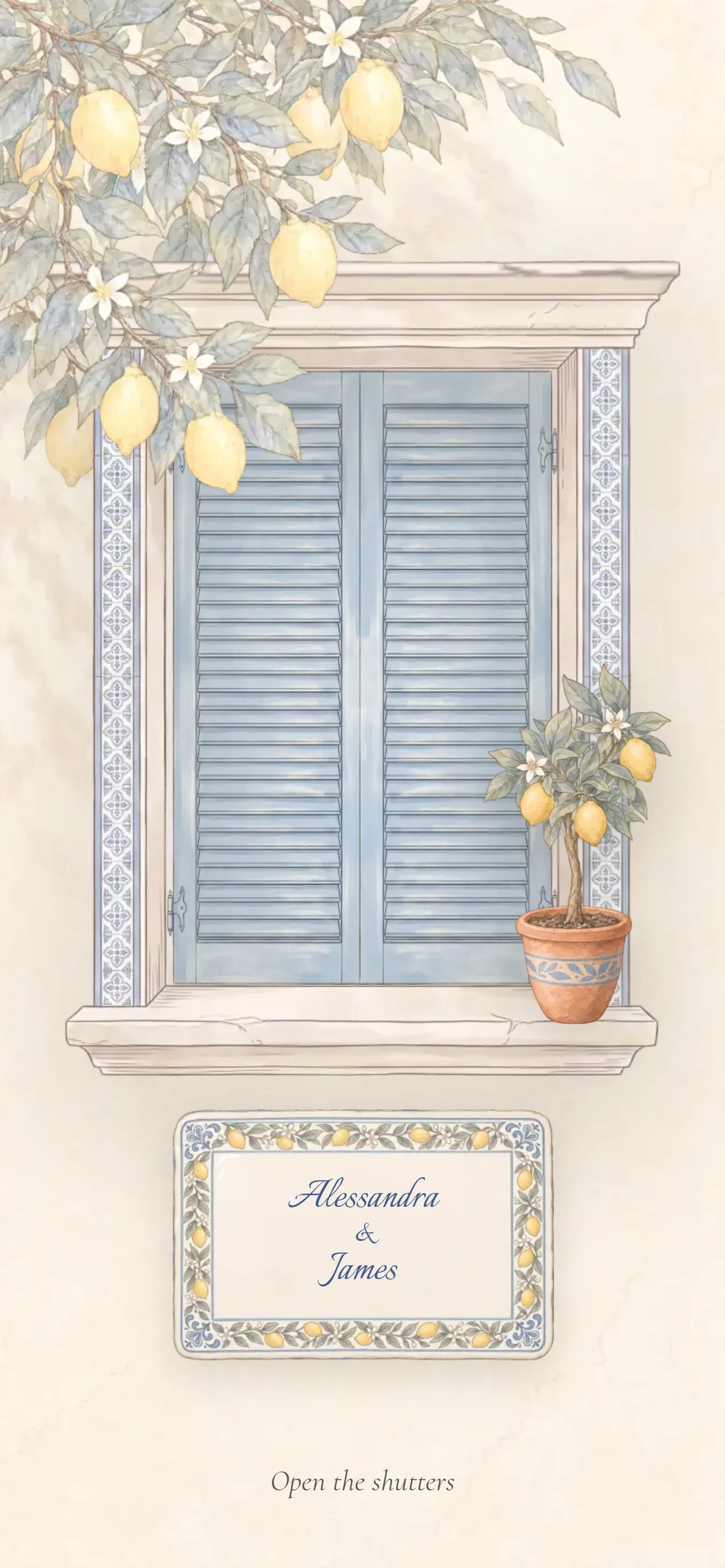
Keep the opening short. An opening that runs on becomes a loading screen, and a guest who comes back a week before the wedding to check the start time does not want to sit through it again. Our checklist for animated invitations goes through the opening point by point.
Does it matter who made it?
Yes, and guests can tell. The last reason paper feels precious is that somebody chose the card, set the type and checked every line. A digital invitation feels careless for the same reasons a cheap card does: a stock design with the names typed in, type that crowds the edges, a date in one style on the cover and another inside.
So ask who sets your words. If the answer is you, alone, in boxes on a form, the result will look like a form. If it is a designer who reads your wording, asks about anything unclear and shows you a proof, it will look like stationery.
What can a digital invitation do that paper cannot?
It keeps every detail in one place and brings the replies back to you. The times, the venue, the dress code and the travel notes sit on one page. Guests stop texting you to ask which hotel is closest, because the answer is already there.
Replies come back on the same page. A guest says whether they can come and who in their household is coming, and, if you ask, what they will eat and what they cannot. If a time changes in the spring, you correct it once, and every guest sees the new time. Reprinting a paper suite is neither quick nor free.
How do you judge one before you buy?
Open it on your own phone and ask five questions. They hold for any supplier, ours included.
- Does it open like an invitation, or like a web page?
- Can guests reply without making an account or downloading anything?
- Do the replies arrive in one list, with meals and allergies attached?
- Who sets the words: you alone in an editor, or a designer?
- Can you open the real thing on your phone before you pay?
If the answer to the last one is no, walk away. You would not order paper stationery without holding a sample.
What can a digital invitation not do?
It cannot be held, and it will not sit on a mantelpiece. Some grandparents keep every invitation they receive, propped up until the day and in a drawer for years after. A link gives them nothing to keep.
The answer is small and kind: post those relatives a printed card with the same words, and a line that says who will reply for them. A link for everyone, and a few cards in the post, settles most families.
When you compare invitations, open each one somewhere ordinary, on the sofa or on the bus, and notice whether you waited for it to open or wished it would hurry. That small feeling is the whole test, and our note on whether a digital invitation is proper enough helps with the relative who still needs convincing.
Questions couples ask
Can guests keep a digital wedding invitation?
Not as an object. A guest can open the link again as often as they like before the wedding, but it will not sit on a mantelpiece. If a relative keeps every invitation they receive, post them a printed card with the same words.
Is a digital wedding invitation less formal than paper?
Not by nature. Formality comes from the wording, the type and the care, and a digital invitation can have all three. Send it to each household in a message with their name in it, never into a group chat.
How long should a digital invitation take to open?
A few seconds. That is long enough to feel like an occasion, and short enough that a guest checking the start time is not kept waiting. Music, if there is any, starts only when the guest taps.
Should we still print anything?
A few cards, for guests without a smartphone and for relatives who keep invitations. Keep each card short: your names, the date, the venue and who will reply for them. Use the same words as the digital invitation.

When you are ready
Create your digital wedding invitation
Choose a design from our collections, and we make it yours: your names, your words, your day. Guests open it on their phone, reply inside the invitation, and every answer lands in your guest list. Two languages at no extra cost. Paid once per wedding, from £149.
Every design opens on your phone as your guests will see it. How it works
Keep reading

Engagement
How to announce your engagement, and who should hear it first
Children and parents first, in person if you can, then close friends, a message and the internet. The newspaper wording, the party and the save the date.

Gifts
Wedding gift etiquette: how much to spend, and how to ask for money
Between £50 and £100 for a couple you are close to, and less for one you know less well, by YouGov’s surveys. Money, honeymoon funds and thank-you notes.

Ceremony and reception
What goes in a wedding order of service, page by page
The cover, the ceremony in order, the words of every hymn and reading, the wedding party and a thank-you. How many to print, when, and two sample orders.

Parties and events
How to plan a hen do, from the first message to the last payment
Who organises it, who covers the bride’s share, when to start and a budget the guest with least to spare can still say yes to, at home or abroad.