Etiquette
Is a digital invitation proper enough for our wedding?
5 min read
By Helen
Are digital wedding invitations acceptable, even for a formal wedding? Usually yes. Here is when paper still wins, and what to tell the family.
Yes, for most weddings, including formal ones, as long as the invitation is made with the same care as good stationery. Paper still wins in a few cases, and this post says which.
Most couples who ask this question already like the idea of a digital invitation. What worries them is an aunt or a future mother-in-law who might think an invitation on a phone is cheap. That worry is fair, and it has a practical answer.
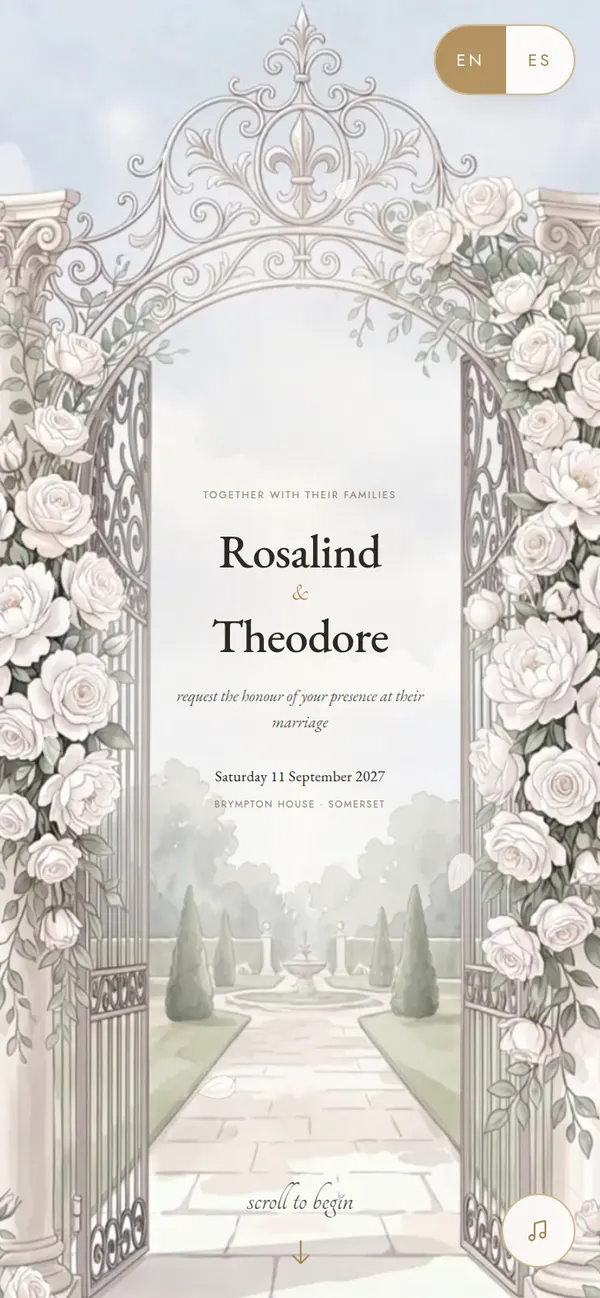
What your guests are really judging
What guests notice is effort. An invitation looks careless when it is a stock design with the names typed in, or a link dropped into a group chat with no greeting.
So the test for a digital invitation is the same as the test for a paper one. Ask three questions of anything you are considering:
- Does it read like stationery? Good type, set by a person, with room around it. Your names and your words, in the order you would say them.
- Does it open like an invitation? A seal to break or a door to open is a small courtesy to your guest. A link that drops them on a page of logistics feels like a booking confirmation.
- Is every detail right? Names spelled correctly, the time and the venue checked, and one clear way to reply.
An invitation that passes those three tests is proper. The medium matters much less than the care.
When digital is the better choice
For some weddings, a digital invitation is also the more considerate option.
Guests abroad. A link reaches a cousin in Singapore at the same moment as a neighbour down the road. Nobody waits for the post, and no invitation goes missing in it.
A date or a detail that may still move. If your venue confirms the room block next month, or the ceremony time shifts by half an hour, a digital invitation can be corrected on the same link. At Everleigh House, names, times and places are corrected free until the day, and if the wedding date moves, the invitation moves with it at no charge. Reprinting a paper suite is neither quick nor free.
A guest list that must answer. Each guest replies on the page for their household, and if you ask, they choose a meal for each course and tell you about allergies. Every reply arrives in your guest list. If you have ever chased forty reply cards in the fortnight before a caterer's deadline, this is the part you will value most.
Guests who need it to be easy. There is no app to download and no account to make. The guest taps the link, and the invitation opens in the phone's own browser.
When paper still wins
There are weddings where paper is the right answer, and it is better to say so plainly.
A family tradition that expects it. Some families have sent engraved cards for generations, and to them the card itself is part of the ceremony. If that is your family, a digital invitation will feel like a break with something they value, however beautiful it is.
A guest without a smartphone. Some guests do not use one, or only use one with help. A link is no use to them, and nobody should miss a wedding because of a phone.
A card to keep. Some grandparents keep every invitation they receive, on the mantelpiece until the day and in a drawer for years after. A printed card gives them something to hold.
The middle way most couples choose
You do not have to choose one or the other for everyone. A sensible approach is a digital invitation for the whole guest list, and a few printed cards for the people who need one.
Print the cards at home or with a local printer, using the same wording as the invitation. Add one line naming the person who will reply for them, or ask a family member to reply on the page for that household. The guest list then stays complete, and your grandmother has a card for the mantelpiece.
Keep the printed cards short. The invitation on the phone can hold the travel details, the order of the day and the dress code. The card only needs the names, the date, the venue and who to tell.
What to tell the family
Sometimes the question is less about the invitation and more about how to explain it. One honest sentence usually does it:
We are sending our invitations digitally, so that every guest has the details in one place and can reply straight away. We will post printed cards to anyone who would like one.
Then ask the relative who worries most whether they would like a printed card. Most people who object to a digital invitation are worried about being left out, and an offer like that answers the worry directly.
A last check before you decide
Open two or three digital invitations on your phone, the way your guests will, and show one of them to the relative you are most worried about. If they smile at the opening and find the reply without help, you have your answer. Our collections all open on your phone exactly as they would for your guests, and our essay on digital invitations that still feel like heirlooms explains why we think a screen can still feel like paper.
See one for yourself
Open any collection on your phone. It is the same experience your guests will have.
See the collectionsKeep reading
The House View
Why an invitation should open on something closed
An animated wedding invitation should open like a letter: one tap, a few seconds, and then every detail your guests need. Here is what to look for.
The House View
Digital invitations that still feel like heirlooms
Why a paper invitation feels special, and how a digital wedding invitation can keep that feeling while it does far more work for you and your guests.
Etiquette
How to word your invitation, beautifully
Who to name first, how to phrase the request, where the dress code goes and what the reply line says: wedding invitation wording, with lines to copy.
Planning
Choosing a collection that matches your venue
A lake, a walled garden, a city hotel: how to choose a wedding invitation design that suits your venue, and how to decide when you like two of them.